An Updated NIH and Publisher Guidance: What Authors Need to Know about NIH’s Public Access Policy

In June, we published an FAQ for authors and librarians to give some guidance on how they might respond to NIH’s accelerated implementation of its public access plan, which requires immediate availability of sponsored research articles upon publication. Our FAQ from June is still good advice, but since then both the NIH and several publishers have updated their guidance and so we are giving some additional information about the latest here.

NIH FAQ Flyer

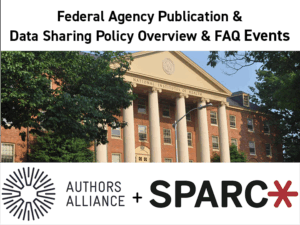
Federal Agency Publication & Data Sharing Policy Overview & FAQ Events

In response to the 2022 Nelson Memo, federal agencies are required to update their public access policies by the end of this year. New policies are now in effect for several agencies: the NIH, CDC, AHRQ, DOE, and NASA. On August 5th at 1pm ET / 10am PT, Authors Alliance and SPARC will host a webcast focusing on new publications sharing requirements, providing an overview of key elements of these policies, highlighting the differences between them, and answering participants’ questions.  You can register for the August 5th event here.

NIH Building

The NIH Public Access Policy: Implementation and Feedback

The NIH Public Access Policy is in effect as of July 1, 2025. In response, Authors Alliance and SPARC have created a form to collect information about challenges or questions faced by authors, librarians and their institutions in complying with the roll out of new public access policies by federal grant making agencies in compliance with the OSTP directive to make federally funded research freely available to the public immediately upon publication. 

The Author-Library Alliance: Supporting Fair eBook Legislation Together 

In May 2025, Connecticut’s legislature passed landmark legislation to address restrictive ebook licensing practices that limit libraries’ ability to serve the public. It aims to ensure ebook licenses align more closely with  libraries’ core public interest mission of lending, access, and preservation. This represents a pivotal step toward safeguarding the role of libraries in the digital age. As more states consider similar measures, a key question arises: Should authors support these efforts? The answer is unequivocally yes— and here’s why.

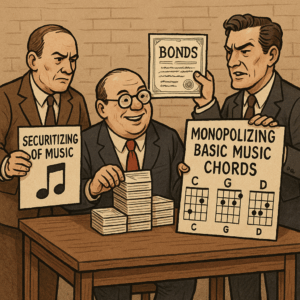
Bonds, Beats, and Lawsuits: How Ed Sheeran Won

Structured Asset doesn’t make music nor aim to enrich our cultural life; instead, it uses copyright enforcement as a weapon against artists like Ed Sheeran, and turns a system meant to protect creativity into a mere vehicle for chasing profit.

What Happens if the AI Copyright Class Actions Settle?

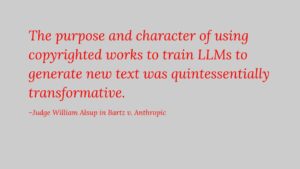
As the high‑profile copyright lawsuits against AI companies proceed, the courtroom drama captures headlines. But I’ve long thought that settlement may be the real outcome to watch.

We may already be entering “settlement watch” territory in one of the fastest-moving AI cases, Bartz v. Anthropic.

Scroll to Top