
This guest post is by longtime Authors Alliance member Anne T. Gilliland. She most recently served as the Scholarly Communications Officer at UNC Chapel Hill. This is the latest in our series of posts marking the 50th anniversary of the Copyright Act of 1976. To find a list of all the posts in this series, click here.
In this post, I discuss the US Copyright law’s conferral of the moral rights of attribution and integrity on creators of certain types of visual art in Section 106A. This is an interesting application of rights that are often quite important to creators of all sorts of material, but that are not normally protected under U.S. law.
While most of U.S. copyright law treats author rights in terms of economic gains and harms, moral rights move author rights into the realm of the personal, concentrating on how those rights relate to the autonomy of the individual regardless of the money involved. Section 106A has given rise to a few dramatic and high profile cases such as Castillo v. G&M Realty, a case about the destruction of public murals in the 5Pointz area of Long Island City, but in comparison to other parts of Title 17, very few cases have been litigated since its enactment in 1990. Practically speaking, Section 106A is primarily important to creators of public art and other art work of recognizable stature.
Despite its relatively low volume of litigation, discussion of Section 106A is a good way to explore fundamental and personal questions about visual art as well as laying out the basics of the moral rights in the U.S.
How and why did this small provision for moral rights take shape within Title 17? And how does the definition of visual work within the Act make sense to me as a person who makes visual art and appreciates it? I began this process of reflection on the general question of art and copyright first as an art student in the late 1970s during the time the present Act took effect. Decades later, when I learned about moral rights and their narrow application in US copyright law, I began the process of reflecting on how I considered visual art covered by Section 106A different or the same as other works that copyright protects.
I have always loved to look at visual art and to make visual art. The spoken and written word is fundamental in my life, but visual art is freedom and joy, even when I use it to deal with painful, serious subjects. It has always had this secondary but important purpose for me; I never planned to make a living as an artist, and I never have, although I have sold and exhibited my artwork from time to time. As I live and work within a copyright framework that relies heavily on the idea that economic benefits drive creation, moral rights for visual art say something special to me as a creator of these works.
Section 106 of the Copyright Act lays out the basic exclusive rights of the copyright holder, which include reproduction, making derivative works, public performance, display, distribution, and performance by digital audio transmission. The following Section,106A, lists two other exclusive rights that are available to rights holders who have created visual art within narrowly-defined circumstances. These moral rights are the right of attribution (the right for creators to have their names associated with the work) and integrity (the right for a work not to be degraded in some way). Moral rights are a much greater part of copyright in Europe and many other countries. For example, anyone who opens a book published in the UK may examine the verso of the title page and see a statement about the author’s moral rights.
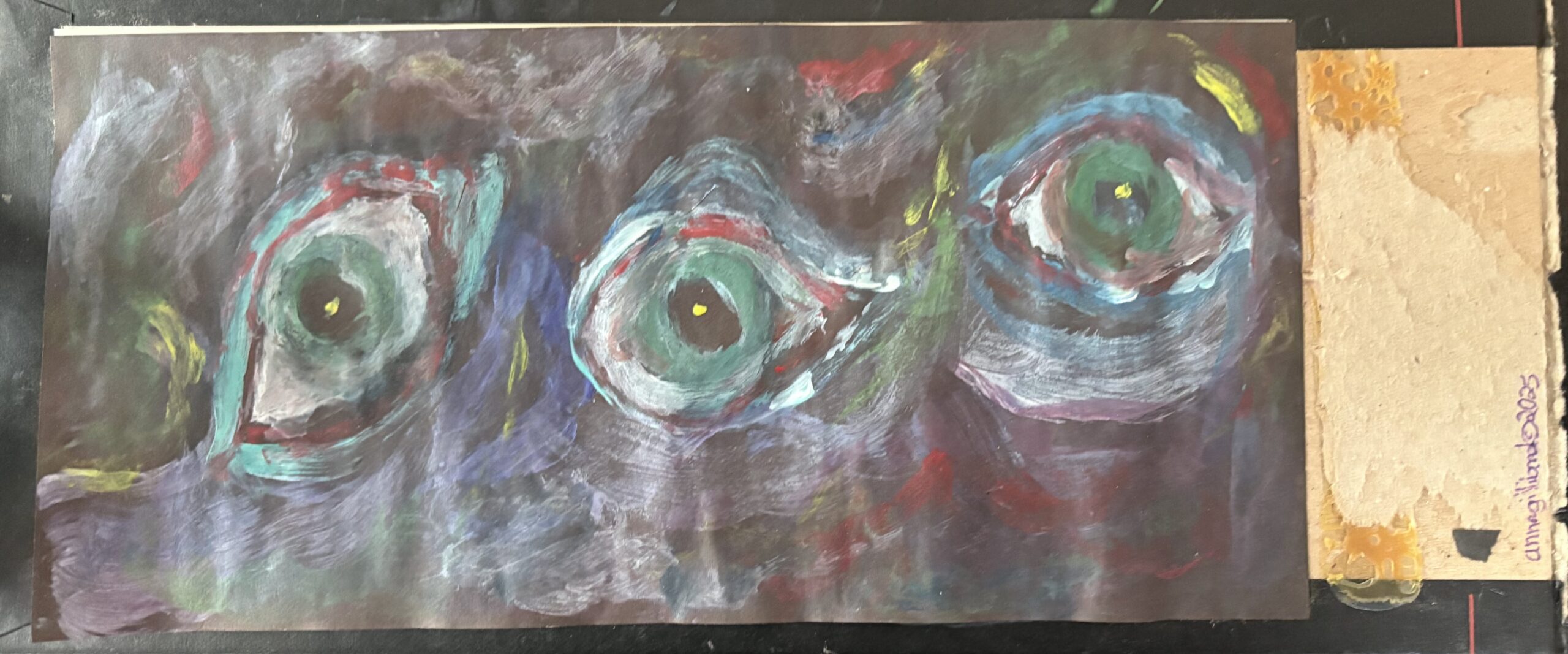
Acrylic and collage
© Anne Gilliland, 2025
The Passage of VARA and What it Covers
The passage of the Visual Artists Rights Act of 1990 (VARA), which was codified in Section 106A and elsewhere in Title 17, was the first time that moral rights entered US copyright law. The impetus was the desire for the US to join the Berne Convention, the primary international treaty that governs international copyright agreements, and Berne signatories must comply with a number of requirements, including some sort of recognition of moral rights. The Copyright Office’s report on Authors, Attribution and Integrity (2019) and the Hearing on the Act that the House held before its passage give some background on the decades-long discussions about and controversies over the US joining Berne. There had been keen opposition from the motion picture industry and other stakeholders because of the fear that moral rights would give creators control over works made for hire, since generally moral rights cannot be transferred by contract.
The VARA was narrowly written to only apply to works of “fine” art and to unique works and limited edition prints to address these industry groups’ concerns and to not disrupt other established patterns for exclusive rights. As part of its incorporation of Section 106A, Congress added a definition of visual art to Section 101. A work of visual art may be a drawing, print, or sculpture that exists as a single copy or as a signed, numbered limited edition of 200 copies or fewer. Similarly, a photograph may be a work of visual art, but only if it is produced for exhibition purposes as a single copy or in a limited edition under the same circumstances. The list of what is not a work of visual art for the purposes includes, among other things, a poster, map, technical drawing, motion picture, applied art, periodical, electronic publication, merchandising or advertising items, works made for hire, or works “not subject to copyright protection.”
Under the provisions of Section 106A, creators of works of visual art have right of attribution which includes the right to claim to be the author of the work, to disclaim authorship works they did not create, and to prevent attribution in the event of a modification that would prejudice their honor or reputation. Creators also receive the right to integrity, which includes the right to prevent modifications to a work that would cause the prejudice referenced in the preceding section. The right of integrity also encompasses the right to prevent the destruction of a work of “recognized stature.” These are subject to additional limitations in Section 113 that lay out procedures, rights, and responsibilities for situations where a work of visual art, such as a wall mural, has been incorporated into a building that is scheduled to be demolished or remodeled.
The House Hearing on VARA discussed the necessity of some recourse for artists whose work has been substantially disfigured, including the distressing tale of an Alexander Calder mobile at the Pittsburgh airport, which at different times was painted green and gold to match the Allegheny County branding colors, painted pink in an effort to rectify that mistake, and prevented from moving, thus obviating the entire of the mural. The VARA is designed to prevent this sort of treatment, but modifications of visual art that take place because of the passage of time or because of the need for preservation activities are not actionable. Additionally, none of the rights of integrity and attribution are applicable to reproductions of works of visual art, such as mass-produced posters depicting an oil painting that is exhibited in a museum.
In line with most moral rights schemes around the world, only the author of the work of visual art receives the rights of attribution and integrity. The rights of attribution and integrity in visual art cannot be transferred and survive the transfer of the rightsholder’s other exclusive rights under copyright as well as any transfers of the physical object. On the other hand, a creator of a work of visual art may waive moral rights, and that waiver by itself creates no transfer of other exclusive rights or of the physical object. For applicable works created on or after the enactment of VARA, rights run for the life of the author or for the life of the last author to die if there are co-authors. For works created before the VARA took effect, the author’s moral rights last for the same amount of time as the other rights in Section 106, provided that the author has not transferred title in the work.
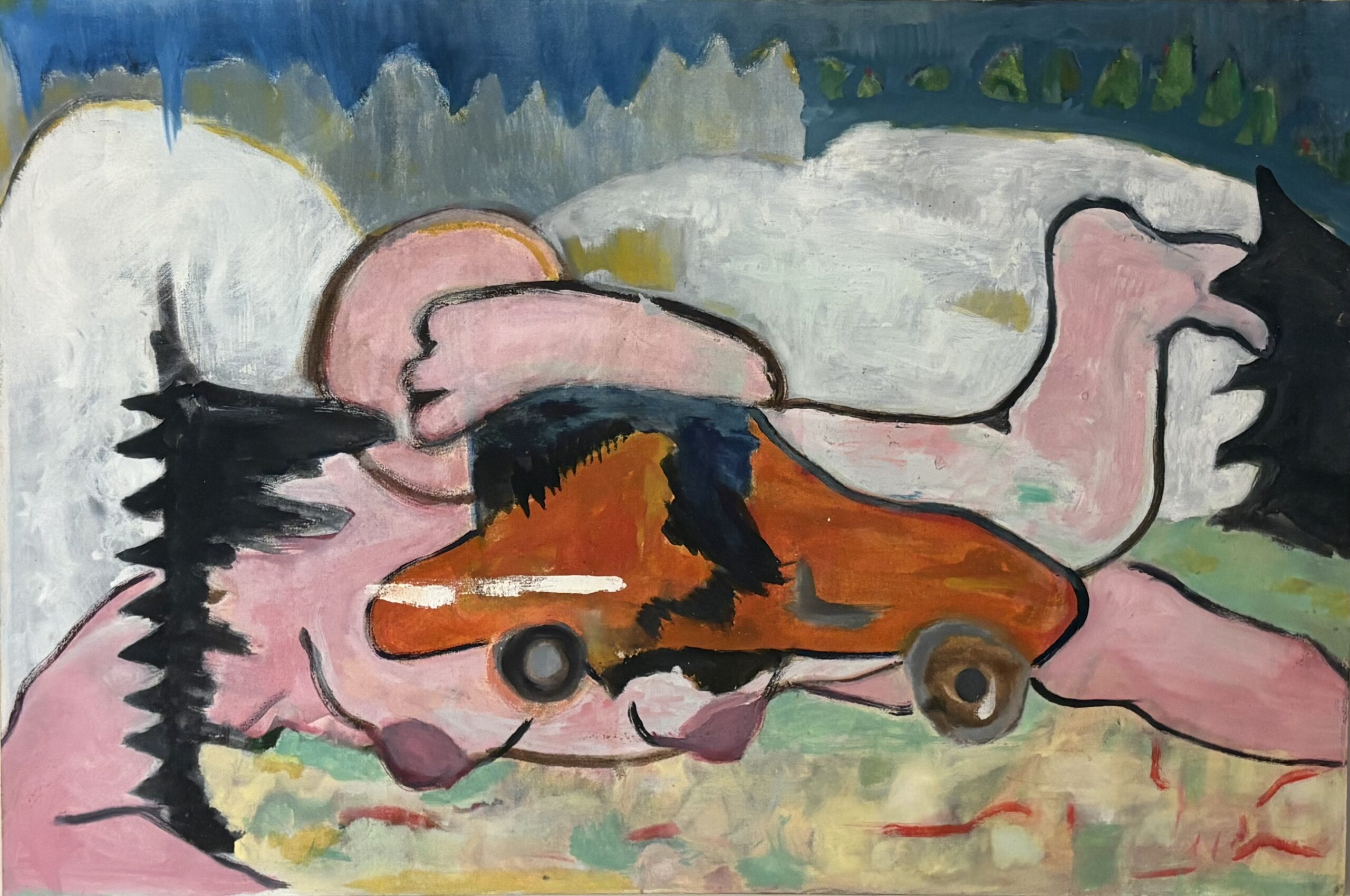
Oil
© Anne Gilliland, 2000
Moral Rights and the Incentive to Create
It was through visual art that I first became interested in how and why people create and how copyright plays in part in those motivations. In 1978, I was in an undergraduate art class when a guest lecturer spoke to us about the new copyright law that had just taken effect. I am sure that I missed many of the nuances of what she told us, but I came away with the essential idea: Under the new law, I had a copyright in my work as soon as I created it, without the need for registration, even though I was a teenager with almost no body of work. I began to get the sense that copyright law was for all creators, regardless of position.
Decades later, in my midlife, I went to law school and eventually took a copyright class during my final semester. Throughout the class, I had been thinking about how the law assumes creators’ motivations and the incentives that work for them and contrasting them with my own experience as a creator and that of others that I knew. When I first learned about the provisions of the VARA and contrasted them with the other exclusive rights in Section 106, I began to think more closely about my own intellectual and emotional relationship to the visual art I create and how that differed from my attitude to other works I create. Within the world of the VARA, the physical object and creative expression both receive protection in what is assumed to be a unique relationship. Is this true for me as a creator and a consumer of visual art? I think that the answer is yes. As with all creative works, when I paint a picture there is labor, inspiration, time, revision, and ultimately–I hope–some level of completion.
All of these stages and emotions are present when I write an essay or make a video, so why should a work of visual art be special and why should its creator receive moral rights? One reason is that a reproduction of a painting often loses qualities that the original possesses while a reproduction of an essay or a video is less likely to provide a lesser experience. For example, for many years I didn’t appreciate the work of Charles Burchfield until I saw an exhibition of his paintings face to face. Similarly, the experience of viewing the actual painting of Larry Rivers’s History of the Russian Revolution: From Marx to Mayakovsky is quite different from seeing a reproduction on paper or a computer screen. Some of the difference is because of textures and reflections of light that become more meaningful when looking at the originals, and this is even more pronounced when a work is a sculpture or has mixed-media elements. Occasionally, I have come upon something I’ve created unexpectedly, when visiting a relative who displays art I made decades ago or seeing a photo of my visual art on a web site or reading a reprint of an article I wrote in the past. I always have the pleasurable shock of recognizing my creation, but there is a difference for me when I view the original visual art opposed to the reproduction. The former is truly my calf, my creation.
Though visual art presents perhaps an acute case for the applicability of moral rights, other works also deserve attribution, and in many contexts authors are able to achieve them through other means. For example, attribution for use is the crux of the bargain that authors strike when they use Creative Commons licenses, which allow reuses of their work but condition that permission on a form of attribution. Whether moral rights of attribution should be expanded in the U.S. beyond visual works has often been debated, as highlighted in the Copyright Office’s 2019 attribution study, and in other efforts such as the Copyright Principles Project (an effort of many leading copyright scholars and others to identify areas of improvement for US Copyright law) which recommended strong consideration for such extension, but made it clear that extension would be neither straightforward nor easy.
I will probably never create what Section 106A calls a “work of recognized stature,” and my visual art has almost nothing to do with my economic fortunes. Nevertheless, the moral rights in Section 106A and the concepts behind them say something valuable and true about this part of my life as a creator.
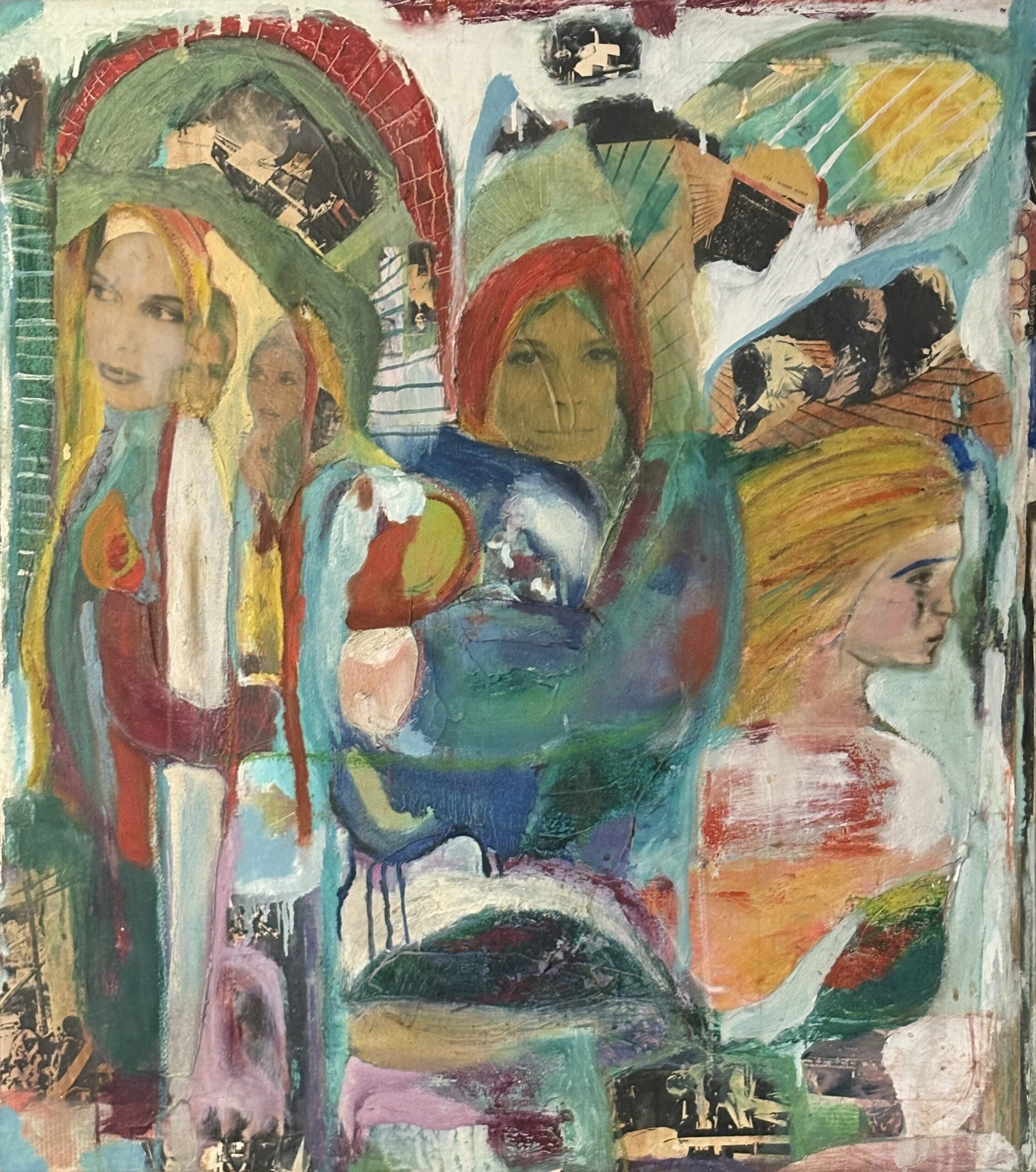
Oil and collage
Photos by Eric Conrad
© Anne Gilliland, 1979–2010
Discover more from Authors Alliance
Subscribe to get the latest posts sent to your email.