
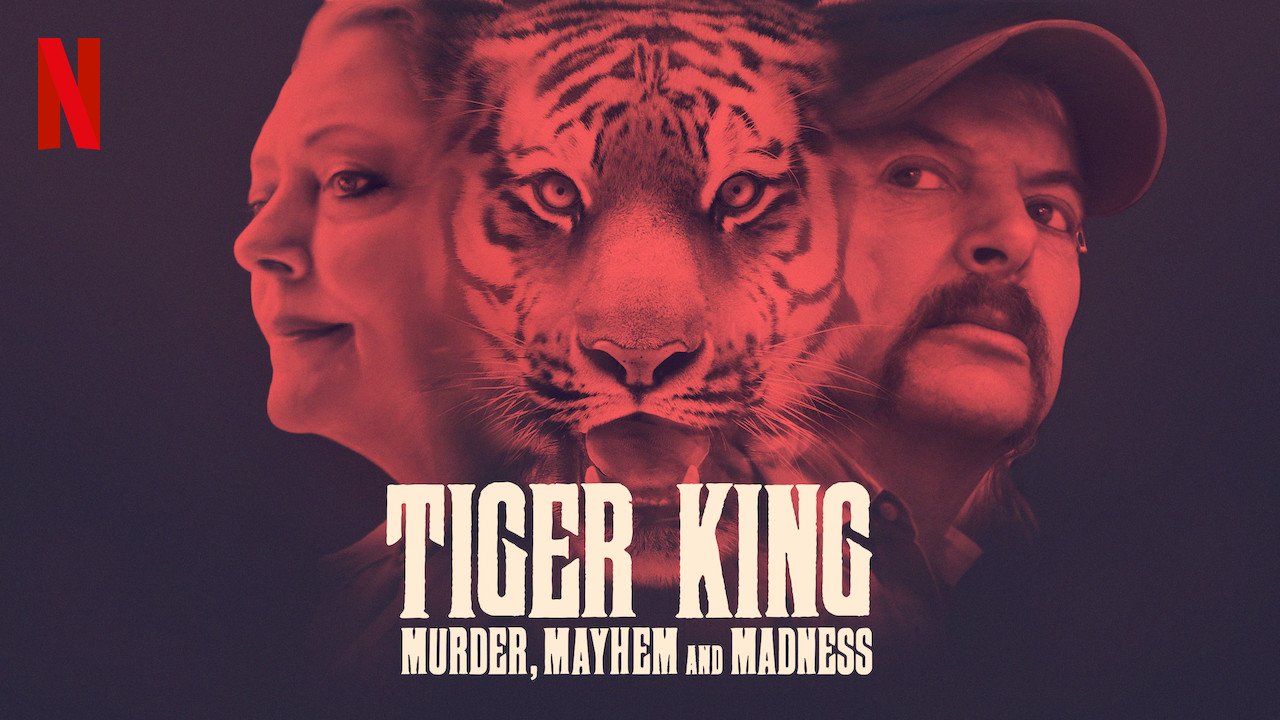
In May 2024, we filed an amicus brief urging the Tenth Circuit to rehear Whyte Monkee Productions v. Netflix. The previous decision was disastrous for documentary filmmakers, historians, and anyone else who uses photographs, movie clips, or other works as historical reference points or for illustration. That’s because the court previously took the position that fair use generally disfavored uses that didn’t directly comment or criticize creative aspects of the underlying work. This meant that all sorts of common uses that engaged with the subject of an underlying work rather than its artistic content were now in jeopardy. It came to this conclusion based on what was, in our view, a significant misreading of the Supreme Court’s recent guidance in Andy Warhol Foundation v. Goldsmith.
Thankfully, the court agreed to rehear the case. Yesterday, it issued a new opinion, and it completely reversed course. The decision affirmed the lower court’s holding that Netflix’s use—where it took a short video clip from a recording of a memorial service to give context about the main character in its documentary series—was fair use.
As Yuanxiao Xu discusses here, there are only a few post-Warhol fair use appellate cases, and Whyte Monkee was one of the more concerning because it took a particularly constrained view of what “transformative use” means, potentially limiting its use for creators in the future. The new opinion largely corrects that.
What the court says about transformative use after Warhol
Unlike the actual show, the facts of the case are straightforward: Timothy Sepi shot a video of the funeral of Joe Exotic’s husband, Travis Maldonado, which was livestreamed on YouTube. Netflix used, without permission, about 66 seconds of that footage in Tiger King, juxtaposing Joe Exotic’s eulogy with critical commentary from Maldonado’s mother. The district court found fair use; the original Tenth Circuit panel reversed, concluding that the use was not fair.
The key issue in both the first opinion and this new one is whether Netflix’s use is viewed favorably under the first fair use factor, which evaluates the purpose and character of a use. As part of that analysis, courts look at whether a use was “transformative,” which means asking “whether the new work merely ‘supersede[s] the objects’ of the original creation . . . (‘supplanting’ the original), or instead adds something new, with a further purpose or different character.” This has been the basic formulation of “transformative use” since the Supreme Court adopted it over 30 years ago in Campbell v. Acuff-Rose.
In Warhol1, the Supreme Court revisited transformative use. As that court explained, “Whether a use shares the purpose or character of an original work, or instead has a further purpose or different character, is a matter of degree. Most copying has some further purpose, in the sense that copying is socially useful ex post. Many secondary works add something new. That alone does not render such uses fair. Rather, the first factor (which is just one factor in a larger analysis) asks “whether and to what extent” the use at issue has a purpose or character different from the original. The larger the difference, the more likely the first factor weighs in favor of fair use. The smaller the difference, the less likely.”
So, how does one evaluate how much is enough? In the first version of this case, the 10th circuit didn’t get beyond the facts of Warhol, essentially concluding that unless a use targeted underlying creative or artistic aspects of the original—criticizing or commenting on it, which is what the court in Warhol looked for in that case—then whatever it was, it was simply not transformative enough.
This time around, the 10th Circuit took a closer read of Warhol and focused in more precisely on the emphasis Warhol places on “justification” for using the original work. In doing so, it identified two different pathways to showing “justification.”2
For the first pathway, the court (quoting Warhol) explains a secondary work that “has a distinct purpose is justified because it furthers the goal of copyright”—viz., “to promote the progress of science and the arts, without diminishing the incentive to create.” “If the secondary use is transformative in this broad sense, then no independent justification is likely to be necessary.”
The second pathway is narrower — a secondary work that shares the same or similar purpose as the original work is more likely to be a “substantial substitute” for the copyrighted work — “which undermines the goal of copyright.” Accordingly, it is unlikely to be deemed justified in the broad sense. If such a use is to be justified, it likely must be in a “narrower sense.” In this narrower sense, “a use may be justified because copying is reasonably necessary to achieve the user’s new purpose.” (slip op. at 28, citations omitted).
The court holds up parody as a paradigmatic narrower-sense case explaining: “The Warhol Court elaborated by pointing to parody as an example where the secondary use of the copyrighted work may be justified in this narrower sense because of the essence of that use: that is, the essence of parody is to target the original work for imitation to achieve some comic effect — specifically, in order for the user to effectuate its parody purpose, the user needs to target the original work.”
Targeting is not required
One major takeaway here is that targeting creative aspects of the original isn’t always required. The most direct rebuke to the narrow reading of Warhol comes when the court addresses the plaintiffs’ argument that Tiger King could not be transformative because it did not comment on or “target” the funeral video itself. The court squarely rejects this: “Although the Supreme Court recognized in Warhol that targeting can be important, the Court crucially stated that ‘targeting is not always required.’”
In addition to this clear statement quoting from Warhol itself, the court also relies on Google v. Oracle, where the Supreme Court found a transformative use of copyrightable software code without any targeting at all — because the secondary use served a different purpose (interoperability and the application of preexisting programmer skills in a new environment). It also cites the Second Circuit’s recent decision in Romanova v. Amilus and the Eighth Circuit’s decision in Griner v. King for the same proposition.
For this particular use, the court makes clear that because the use has such a distinct purpose — Defendants used the funeral video, meant for memorial purposes “to further a larger narrative that, among other things, commented on and educated viewers about Mr. Exotic and the “big cat world” — additional justification isn’t necessary. It is justified “in the broad sense.” But even in other “narrow sense” cases, the court is clear that targeting is just one way to satisfy the need for justification — useful when the secondary use shares a purpose with the original. It is not a generic threshold that all transformative uses must clear. The plaintiffs’ contrary reading, the court says, “reflects a misreading of governing precedent, and we reject it.”
For anyone working in fields where the secondary use is meaningfully different from the purpose of the original but does not involve commentary on the original — text and data mining, AI training on copyrighted works, indexing, search, accessibility, scholarly reuse, and documentary filmmaking — this matters a great deal.
Documentary use is strongly, but not categorically, favored
The court’s treatment of documentary use is notable. The opinion devotes a full section to documentary practice, drawing on two important documentary film fair use cases: Bouchat v. Baltimore Ravens and Elvis Presley Enterprises v. Passport Video.
The court explains that documentaries frequently incorporate snippets of copyrighted material to advance uses that fair use favors, as listed in the statutory preamble — criticism, comment, scholarship, news reporting — and that courts have, accordingly, often found the first factor to favor fair use in documentary cases.
“This outcome does not stem from the fact that documentaries are categorically favored. They are not. There is no presumption in favor of fair use that flows from attaching the label ‘documentary’ to a secondary work.” Rather, the reason documentary uses tend to win on the first factor is because they tend to exhibit the characteristics that matter: an objectively different purpose from the original, incidental or limited use of the borrowed material, and alignment with the purposes listed in fair use’s preamble.
The court uses Bouchat as one example. There, the Fourth Circuit considered the NFL’s use of the original Baltimore Ravens logo — itself the subject of a long-running infringement suit — in a series of commercial videos recounting the team’s 1996 draft, key moments in franchise history, and individual player careers. The court found the use transformative because the logo, originally a brand symbol, was now functioning as a piece of factual historical record — used “for a fraction of a second” in some shots and “for a longer stretch” in others, but always to tell a story about the team rather than to identify it. That the logo itself was unaltered did not matter; the use was animated by a different purpose and was, in the Fourth Circuit’s words, “exceptionally insubstantial.” The label “commercial” did not sink it.
Elvis serves as the cautionary example. There, the Ninth Circuit found the first factor to weigh against fair use because the documentary used substantial portions of the clips for the same intrinsic entertainment value the original works provided. The label “documentary” did not save it.
Applied here, Tiger King‘s use of 66 seconds out of a lengthy funeral video — interspersed with critical commentary from Maldonado’s mother, deployed to illustrate Joe Exotic’s showmanship — has a clearly different purpose from a video shot to memorialize a friend.
As one person pointed out to me, the court’s explanation may be a bit incomplete — one additional area the court didn’t touch on much, but a good reason documentary use may be favored is that they are often relying on prior works for their unprotected factual content versus creative expression. But on the whole, I think the explanation is helpful, and largely aligns with the fair use best practices that documentary filmmakers actually use day to day — limited, purposive use of archival material to tell a different story — without writing a blank check for any work that calls itself a documentary.
A few additional notes
A few smaller features of the opinion are worth mentioning.
First, the court cites the new Restatement of Copyright. To my knowledge, this is the first appellate court citation to it. The court relies on it for a number of important conclusions about how to judge the likelihood of harm to the market for the original. Whatever one thinks of the Copyright Restatement project (I acknowledge it has had some noisy detractors, but I think it has been a worthwhile project with a valuable output), it is now influencing copyright law in real cases.
Second, the court makes some interesting statements about the burden of proof for defendants who may be in a position to challenge market harm. Typically, once the plaintiff demonstrates the existence of some market, the burden is on the defendant to disprove harm (difficult to do, and costly if you need to bring in expert witnesses). Here, the court offers this: “We think that in some cases, akin to this one, the implausibility of substitution can be so apparent that evidence concerning market impact that is extrinsic to the uses of the original and secondary works themselves (including sophisticated empirical evidence, offered by an expert or otherwise) is unnecessary.” Given the challenge of proving a negative, this is a welcome precedent for fair users.
Finally, the court’s reliance on legal scholarship about the meaning of Warhol is notable. It repeatedly cites an article by Shyamkrishna Balganesh & Peter S. Menell for takeaways from Warhol on transformative use and to another by Karen Shatzkin & Dale Cohen on application to documentary film. The reliance on Balganesh & Menell was surprising to me — the takeaway I had from that article would not have led me to the conclusion that the court came to, about how uses with a sufficiently distinct purpose do not need additional justification. But perhaps I need to re-read it more closely!
If you search, you will find that Warhol has resulted in innumerable law journal articles. It’s really overwhelming. You can find articles on how Warhol applies to AI, art in general, appropriation art, art reference uses, documentary films, the introduction of competition analysis in fair use cases (actually one of my favorites and worth reading), and the list goes on.
I know I’m excluding many good ones here, but I’ll end by giving just two recommendations on further reading. First, given the clear importance of “justification” under the first fair use factor, I recommend Pamela Samuelson’s Justifications for Fair Use which the Second Circuit in its post-Warol Romanova v. Amilus decision relied on to explain the many different kinds of cases, outside of criticism and commentary, where courts have found uses to be justified. The second is Michael Carroll and Peter Jaszi’s The Triumph of Three Big Ideas in Fair Use Jurisprudence, which offers, in my opinion, one of the best syntheses of how to read Google v. Oracle and Warhol v. Goldsmith together in light of the broader body of fair use case law.
- I won’t repeat the details of that suit here but you can read our posts on it here, here, here, and here. ↩︎
- This is the first court I can recall taking this more structured two-path approach to the transformative use analysis, though I think the end result is essentially the same as what, for example, the Second Circuit articulates in Romanova. The 10th circuit also makes clear that a use can be justified in both the “broad” and “narrower” sense. ↩︎
Discover more from Authors Alliance
Subscribe to get the latest posts sent to your email.