The Public Interest Corpus Update – Oakland Edition
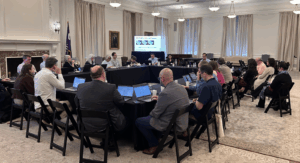
The Public Interest Corpus recently completed the last of three planning workshops. The final workshop was hosted at the University […]
Open access publishing has transformed the way research circulates. In principle, open access means that anyone, anywhere, can read and reuse scholarly work without financial, legal, or technical barriers. But in practice, many works labeled as “open” are quietly constrained by restrictions that limit how they can be used, especially by machines.
This is a post by Syn Ong, AI Policy Researcher at Authors Alliance. Authors increasingly rely on text and data mining (TDM) to analyze large corpora across disciplines. Our new working paper, Beyond the Exception: Licensing, Access, and the Realities of Text and Data Mining in the US, UK, and Singapore, finds that formal legal permissions alone do not secure usable access for TDM research. Instead, usable access turns on how statutory rules interact with private licenses, platform architectures, and technological protection measures (TPMs).
We’ve written before about the use of contracts limiting author’s access to fair use, including how publisher contracts restrict innovation
Last month, a diverse set of stakeholders gathered at New York University Law School to contribute to an implementation plan
Our law student intern this semester studied the legal and practical challenges facing TDM researchers. She shares her key takeaways.
On March 3, librarians, authors, publishers, and technologists gathered at Northeastern University Library in Boston to contribute to a startup
Authors Alliance has been closely monitoring the impact of Digital Millennium Copyright Act (DMCA) Section 1202, and we have been watching the development in UK copyright law closely. Here are some updates.
In December 2024 we announced a new project to develop a public interest AI training corpus focused on books. Over
Earlier today, the Library of Congress, following recommendations from the U.S. Copyright Office, released its final rule adopting exemptions to