
Worst Copyright Decision of 2026
Apart from the district court ruling in James v. UMG where the judge desecrated authors’ termination right, no decision has a stronger claim to being this year’s worst copyright decision than the Third Circuit’s precedential opinion in Thomson Reuters v. ROSS. Though the case ostensibly involves two legal research companies, the court’s ruling could broadly impact authors’ ability to use facts and ideas that first appeared in existing works.
ROSS used Westlaw headnotes to extract facts to build a new legal research tool. Importantly, Westlaw headnotes were drafted to closely trace public domain judicial opinions. The Third Circuit panel held that ROSS’s use was a copyright infringement. In so holding, the panel demonstrated its profound misunderstanding of copyrightability and the fair use right.
ROSS filed a petition for en banc rehearing by all Third Circuit judges to correct the egregious errors made by the three judge panel. Six amicus briefs were filed in support of the petition earlier this week. Having multiple amici is very helpful, because each brief is capped at 2,600 words and cannot possibly cover all grounds when the ROSS panel has erred on nearly every point it addressed. Our brief, for example, had no room to address copyrightability at all. Our brief explains that a use that extracts only unprotected facts and ideas without disseminating any of the work’s protected expression does not unlawfully usurp what copyright protects.
Headnotes Are Not Copyrightable
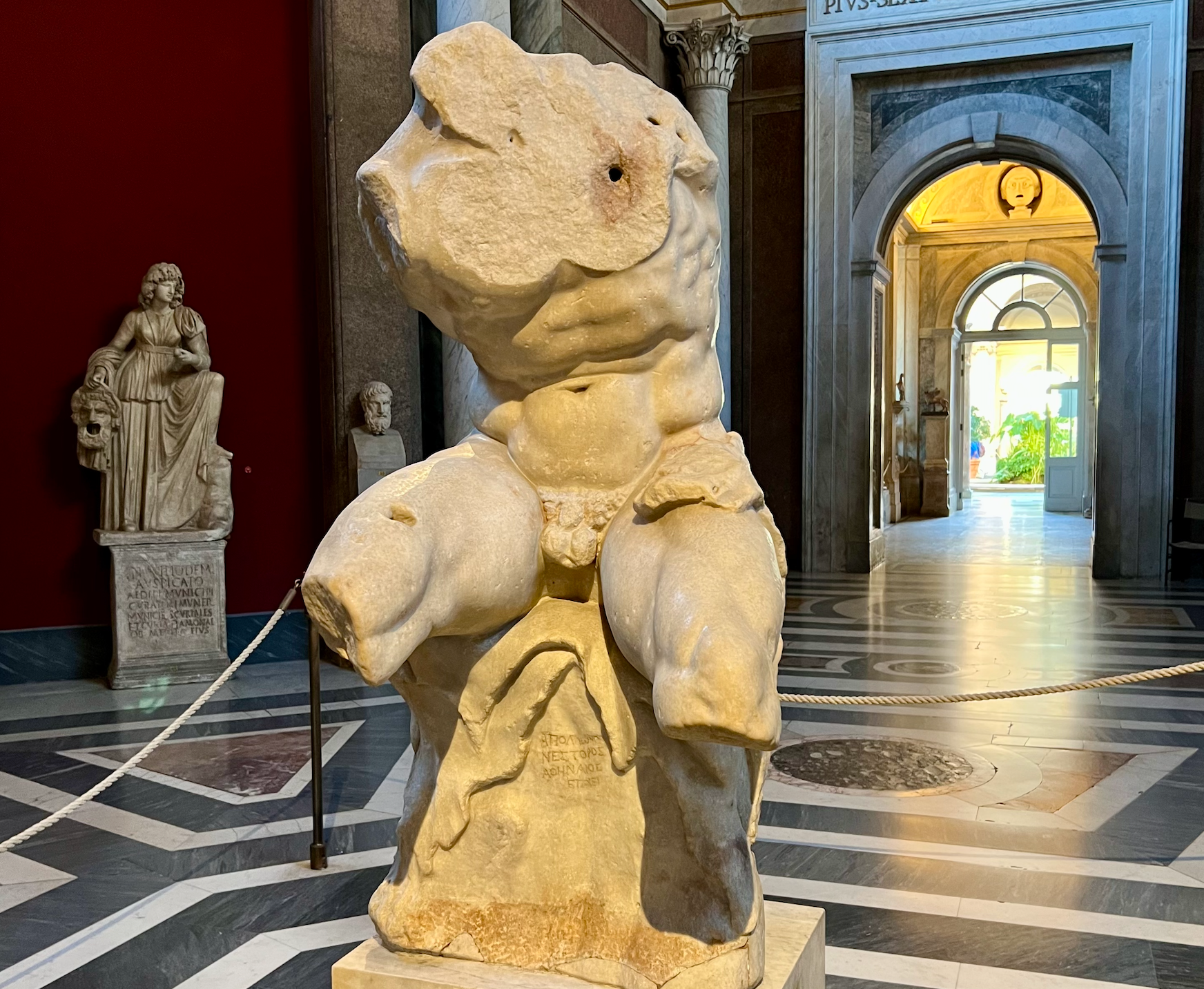
Two amicus briefs focused almost exclusively on the panel’s misunderstanding of copyrightability. Heather Meeker’s brief calls out the district court’s deeply problematic analogy that Westlaw headnotes based on judicial opinions are the same as Michelangelo’s statues made out of marble stone. She explains, “A more accurate analogy would be taking a core sample from the piece of marble to measure its elemental composition . . . Headnotes mine court opinions for nuggets of legal truth, and categorize them as facts.” The brief also questions whether “each headnote is an individual, copyrightable work” as held by the Third Circuit panel.
Professor Brian Frye’s brief calls out one of the most blatant faults with the panel’s opinion: because no examples of copyrightable headnotes were given by the panel, it is “impossible to evaluate [the panel’s opinion] on the merits.” However, based on the panel’s discussion of the headnotes, it was nevertheless possible to discern that Westlaw headnotes are not copyrightable, “because they are only trivially different from the [judicial] opinions they describe.” The brief also addresses the panel’s misinterpretation of Silvertop v. Kangaroo — a Third Circuit decision back in 2019 that held a banana costume to be copyrightable because there are multiple different ways to make a banana costume. Prof. Frye’s brief distinguishes Westlaw headnotes from banana costumes, saying that “Westlaw’s headnotes literally copy the opinion whenever possible because that is the best way to describe a point of law.”
Fair Use Is Not For Suppressing Competition
The brief by the Foundation for American Innovation and the brief by DingDuff both sharply focus on the fourth fair use factor. FAI’s brief points out that treating “useful for training” plus “no license paid” as cognizable market harm would tilt the fourth factor toward the owner in every case, especially when nearly any material can be used as AI training data. FAI’s proposed test, drawn from Texaco and Bill Graham, asks whether the copying serves the work’s ordinary purpose or a transformatively different one. DingDuff makes the same point that copyright cannot be construed to protect against all competitors. A student who copies pages of Harry Potter into a notebook to learn the craft, then sells her own novel, hasn’t infringed no matter how many readers she steals from J. K. Rowling. Thomson Reuters “may charge for its headnotes, but copyright gives it no second fee for what a paying reader learns from them.” Our own brief similarly clarifies that the fourth factor asks whether the secondary use harms the market or value of the work’s protected expressions by substitution. Where the alleged substitute is a different, noninfringing work, and the claimed rivalry depends only on unprotected similarities or general audience overlap, the economic injury does not constitute cognizable harm.
The only brief that specifically addresses the third factor is the brief submitted by Abraham Kang and Kunal Patel. It astutely points out that “[t]he relevant consideration is the amount of copyrighted material made available to the public rather than the amount of material used by the copier.” Fox News Network, LLC v. TVEyes, Inc., 883 F.3d 169, 179 (2d Cir. 2018)
Our brief was the only one that questioned the panel’s discussion of the second factor. We explained how the panel wrongly dismissed the second factor as one that “‘has rarely played a significant role in the’ fair use determination.” In Oracle, for example, the second factor shaped the analysis of the remaining factors.
The First Factor Does Not Require Necessity
Several briefs addressed the panel’s interpretation of the first fair use factor. Our brief argues that the panel mistakenly made “necessity” a prerequisite under the first factor. The panel rejected ROSS’s intermediate-copying argument because ROSS could have worked from the freely available judicial opinions instead. Yet in Google v. Oracle the Supreme Court found Google’s copying to be transformative even though Google could have built its own system. In Feist the Court rejected the idea that a user must themselves do the work of gathering facts rather than copying them from a competitor.
FAI’s brief asks the court to revisit its finding that ROSS’s use was only minimally transformative—that training a system on graded examples to learn which passages answer which questions is a different function from reading headnotes as summaries. Briefs by DingDuff and by Abraham Kang and Kunal Patel contend the panel asked the wrong question by judging the training memos based on the product they helped build, rather than by the use actually made of them.
Out of the four briefs that addressed the first factor, the brief by Kang and Patel may be the most head-scratching because it proposes an entirely novel fair use test of “weigh[ing] necessity by degree.” The brief cites to Andy Warhol Foundation v. Goldsmith for support; however, Warhol never indicates that necessity is required at all, much less a matter of degree. Here is the relevant passage from Warhol:
In a narrower sense, a use may be justified because copying is reasonably necessary to achieve the user’s new purpose. Parody, for example, ‘needs to mimic an original to make its point.’ . . . . An independent justification like this is particularly relevant to assessing fair use where an original work and copying use share the same or highly similar purposes, or where wide dissemination of a secondary work would otherwise run the risk of substitution for the original or licensed derivatives of it. (emphasis added)
Dicta are not binding, but even under this dictum, if a use is transformative and there is no substitution of protected expressions, necessity is irrelevant. Necessity is also not required when there are other justifications for a commercial use.
Even more importantly, it is clear that Warhol’s use of “necessary” is distinct from the ROSS panel’s. Every example provided by the Warhol opinion is a use pointed at the original:
- Parody “needs to mimic an original [copyrighted work] to make its point.”
- Other “commentary or criticism that targets an original [copyrighted] work may have compelling reason to ‘conjure up’ the original.”
- A book review may have compelling reason to borrow “because the review targets the [copyrighted] material for comment or criticism”
In each case, the necessity comes from the object of the use. In Campbell, a parody of Roy Orbison’s “Oh, Pretty Woman,” needed to copy the song directly because the parody was targeting it directly. Necessity arose because the band (2 Live Crew) could not create a parody of a song without quoting the song—their message relied on that specific song.
In Warhol, AWF had no lawful alternative for its use of licensing the Orange Prince. The use under the Court’s scrutiny was AWF’s 2016 license of Orange Prince to Condé Nast. Measured by alternatives (“necessary” according to the ROSS panel), AWF had no alternative but to use Goldsmith’s expression because Orange Prince was built on her photo. If necessity meant “no alternative,” AWF would have satisfied the necessity test.
At the end of the day, any argument that catches the court’s attention is a perfectly great argument. After all, the goal is simply to convince the Third Circuit to reconsider the panel’s ruling. If the Third Circuit decides to rehear the case en banc, there will be plenty of opportunity to revise and clarify the merits arguments.
Discover more from Authors Alliance
Subscribe to get the latest posts sent to your email.